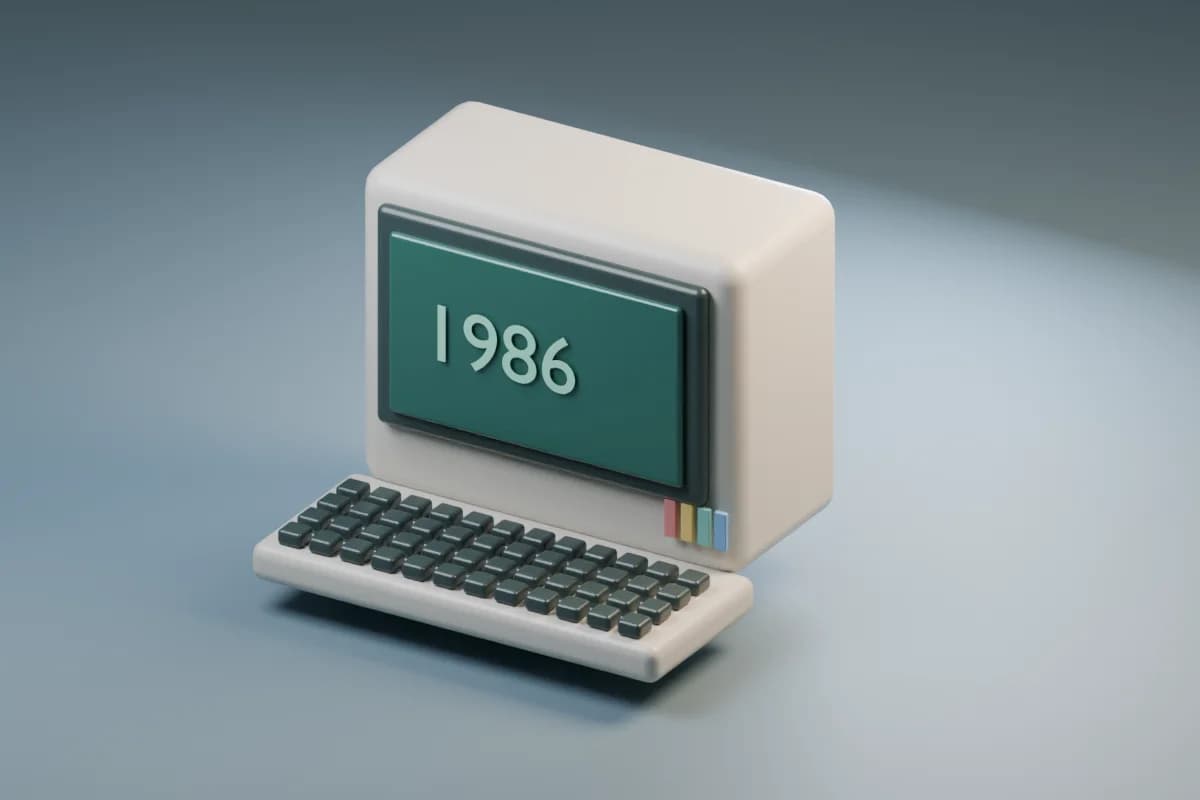
The date that starts the story
My journey with computers began in 1986. ZX Spectrum, Commodore 64, Amiga, and PC are part of it. Today I continue using both PC and Mac. Those few sentences could look like a hardware list. For me, they provide a frame for thinking about different periods: screens, operating systems, and tools change, while an interest in computers can remain. A machine’s name can suggest more than its specifications. It can also bring a way of thinking about what a computer might do into view. That continuity is what interests me here.
This is a starting point for considering a personal journey alongside records of computer history. Every transition date and individual model is not yet part of this archive. Even so, putting the computer families beside one another opens useful questions: how visible were hardware constraints, how was the job of software described, and what has changed in that relationship today? A product’s introduction date and the beginning of my own use are different things. Historical records add context rather than filling in missing personal memories.
ZX Spectrum: a doorway into personal computing
The ZX Spectrum name brings the idea of a personal computer in the home into view. The Science Museum Group’s ZX Spectrum record shows a black plastic machine with its original packaging. An object like this includes more than software on a screen: the box, keyboard, and case offer clues about how technology was presented. Spectrum belongs in my own journey. Looking back at the family today also raises a question about how a computer became understandable as an everyday object, rather than only a specialised system.
Judging older computers only by today’s speed measures gives a narrow view. How a screen, keyboard, and software work together, what a command does, and how a small change affects an outcome remain worthwhile questions. An old computer can offer a smaller system through which to consider complex current tools. What interests me in looking back is the relationship between an idea and the limits within which it took shape.
Commodore 64: more than the name of a device
The C64 is another part of my computing story. For historical context, the Computer History Museum's 1982 timeline records the introduction of the Commodore 64 and its 64 KB of memory. This is not an invitation to compare benchmark results across decades. It is a small starting point for considering how memory, graphics, and sound limits can influence software design. Products from an earlier period deserve to be considered in their own circumstances, rather than only by the modern applications they could not run.
Games are one way into that world. Thinking about the C64 period brings up visual language, the feel of controls, and what can be made with limited resources. A game need not depict everything in detail: a few shapes, a useful movement, and an understandable response can create an experience. Interest in older games can therefore mean considering which parts of a design really matter, alongside enjoying the past. Rivunox, developed with an assistant, is a real current project connected with that interest. The tools differ, while the question of what a player sees and can do remains.

Amiga and the computer as a means of expression
Amiga is also among the computers I used. The Computer History Museum’s 1985 entry describes the Amiga 1000’s arrival and audio and video capabilities beyond those of many personal computers of its time. That context offers a reason to think beyond processing speed when considering a computer’s value. Producing an image, making room for sound, and showing a response to movement are different capabilities. Their meeting in one machine gives the computer a wider field of expression than any single task could describe.
Thinking about Amiga is an opportunity to consider the computer as more than a calculating device. Image, sound, games, and interaction can share the same space. There is a similar breadth when discussing project tools such as Blender, Logic Pro, or Ableton today. We choose and use suitable tools with an assistant as part of making projects, rather than presenting their use as a professional music or 3D art background. Deciding what a tool should help us make can matter more than the length of its feature list. Visuals, audio, and software become meaningful together when they support the same intention.
PC and looking beyond a single brand
PC belongs to the later journey and remains part of my current use. Describing the history as a final move from PC to Mac would therefore be inaccurate. PC and Mac continue together. Different environments, applications, and project needs can give each a place. Rather than ranking brands, I am interested in tools coexisting according to their purpose. That provides a more accurate picture of this stage of the story.
My professional background includes Electronics and Communication Engineering, Linux, networking, and cybersecurity. Those areas involve looking beyond the screen to the system, connections, permissions, and data behind an application. Considering the layers through which an apparently simple action passes can give a fuller view. The profile page brings my professional background and interests together in a shorter form. The computing journey adds another kind of context: the relationship between that background and the changing tools that have been part of my world over many years.
Do not make the present compete with the past
A newer computer being faster or more capable does not make older tools meaningless. Equally, describing the past as a purer and better age can underestimate what today's tools make possible. Different periods have different difficulties and opportunities. Constraints in an older system can make design decisions more visible; modern tools can make it easier to connect different forms of work. Those views can complement each other. Remembering earlier technology is worthwhile when it helps identify what has continued through change, rather than dismissing everything that came afterwards.
Working with AI adds another kind of relationship with a tool. An idea can become writing, an application experiment, or a visual sketch, while responsibility for checking the result remains. I explore that working pattern in at the table with AI. The current shape of computer curiosity is not just choosing stronger hardware. It also involves explaining an intention clearly and finding out whether the result genuinely works. The equipment changes, but those questions still matter when a project moves from an idea to a usable result.

How a personal archive can grow
A personal archive can grow through new details. A model, material surviving from a particular period, or a photograph shared with its context can add another layer to the broad frame. It does not have to be completed all at once. What matters is that the pieces establish understandable relationships. The information attached to an object can also explain why we keep it. Naming an item and describing its place in a life are different acts. Returning to one specific detail can deepen the story without requiring the whole past to be retold.
Organisation belongs to a digital archive too. A date beside an image, a useful note title, or a connection to a computer family can make it easier to return. Separating known information from estimates is enough to begin. The illustrative images accompanying this article connect the families; they do not substitute for photographs of my own hardware. Marking the confirmed 1986 starting point is possible without assigning a year to every transition. An archive can become clearer by leaving a gap visible instead of adding unsupported detail simply to make a timeline look complete.
Different screens, continuing curiosity
I do not want to reduce this journey to a single achievement or a collection of devices. ZX Spectrum, C64, Amiga, PC, and the continuing use of both PC and Mac bring different periods into one story. What joins those names is the longstanding place of computers in my world. Years of interest do not automatically create expertise in every subject. They can, however, encourage a view of technology that includes older tools alongside whatever is currently popular. That is part of what gives this history meaning to me.
SeTRoX is not the final destination at which the story is complete. It is a developing personal space for writing, projects, and everyday thoughts. I want to place earlier computing interests and current work in the same home: a game, a website decision, an AI experiment, or simply a question worth asking. The picture can grow as more personal details are shared. For now, one line is clear. A journey that began in 1986 has not ended at a single device or operating system. The screens have changed; the story of curiosity continues.
Let’s leave a thought here.
Sometimes the next step is to pause and look again.